
-
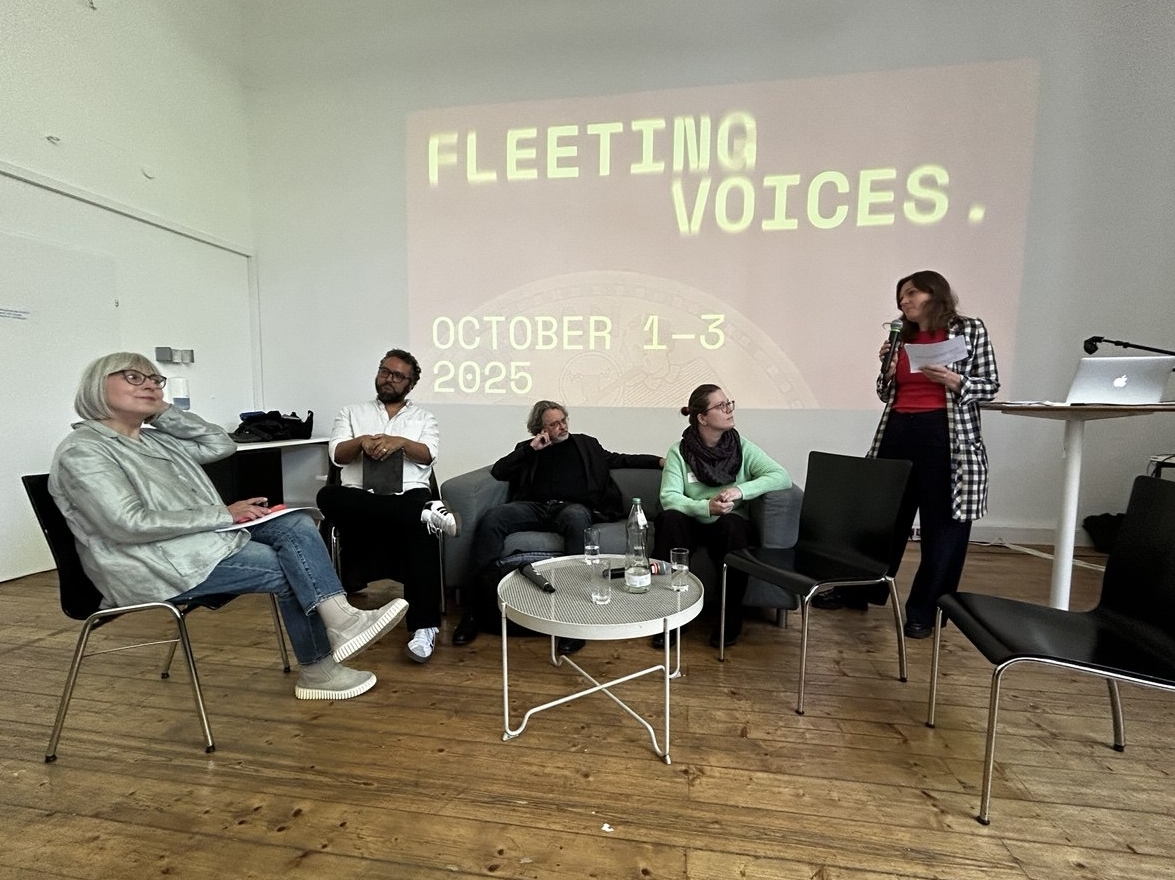
Photo: Eva Kapeller-Hallama
-
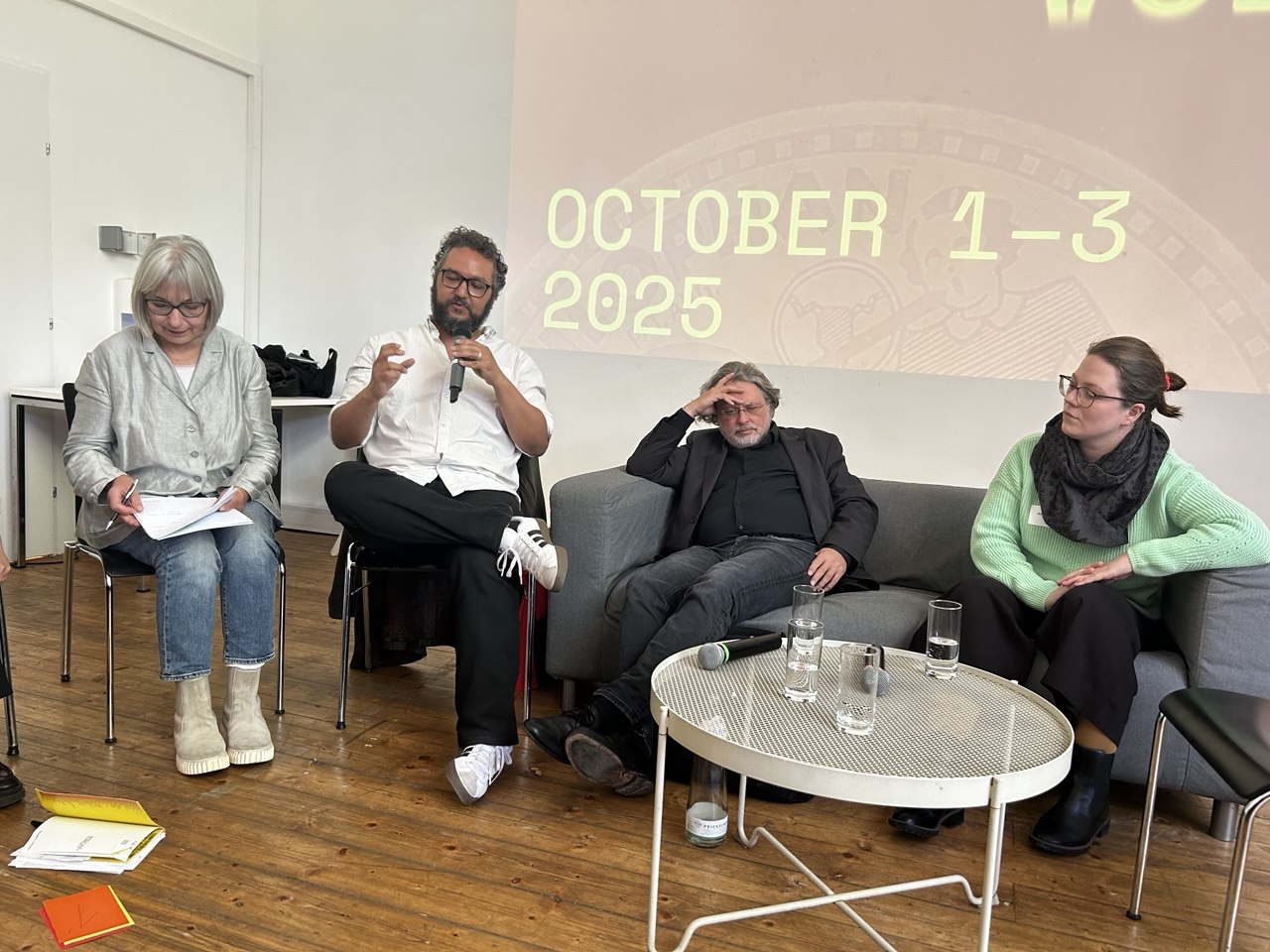
Photo: Eva Kapeller-Hallama
-
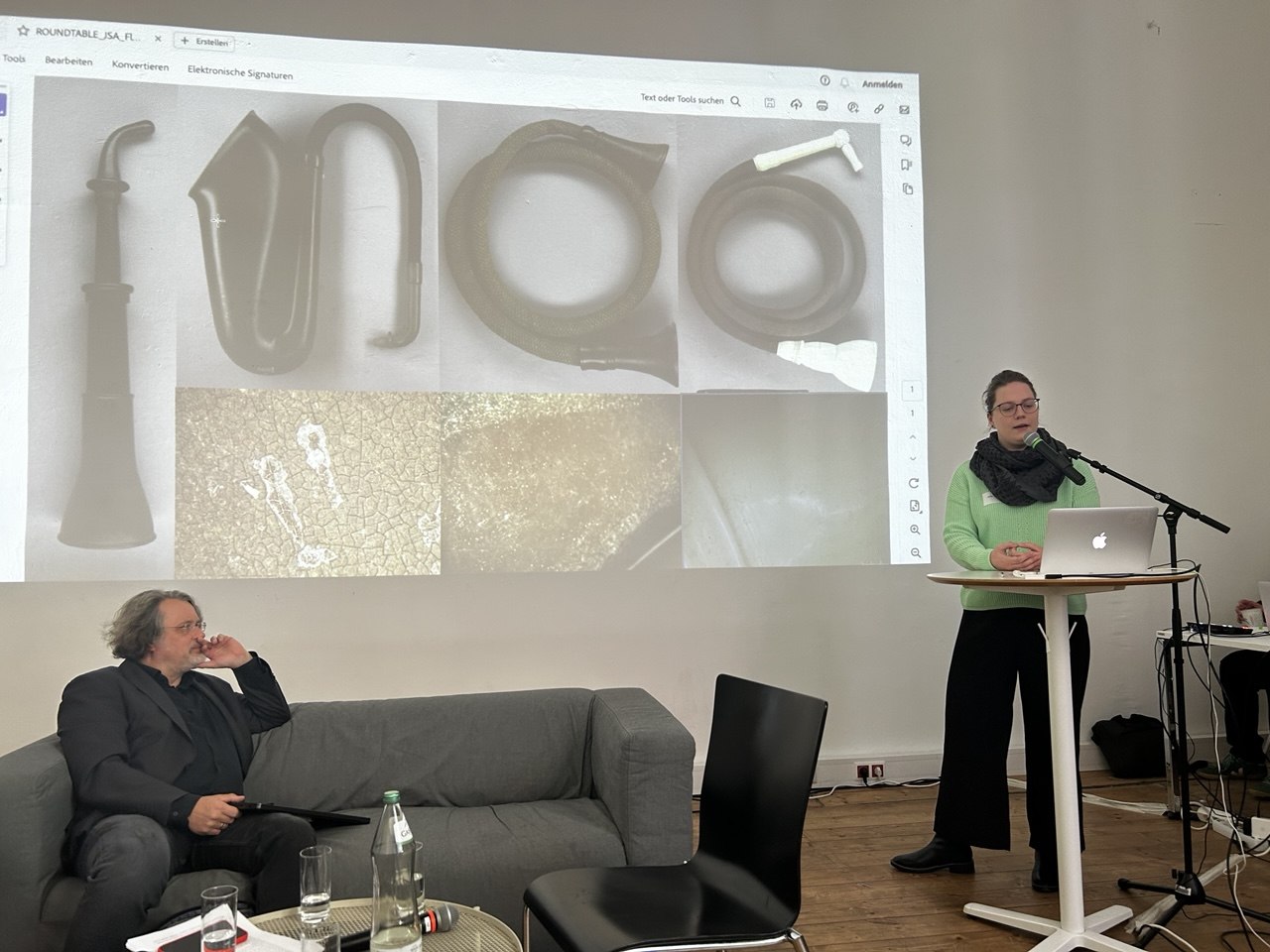
Photo: Eva Kapeller-Hallama
-
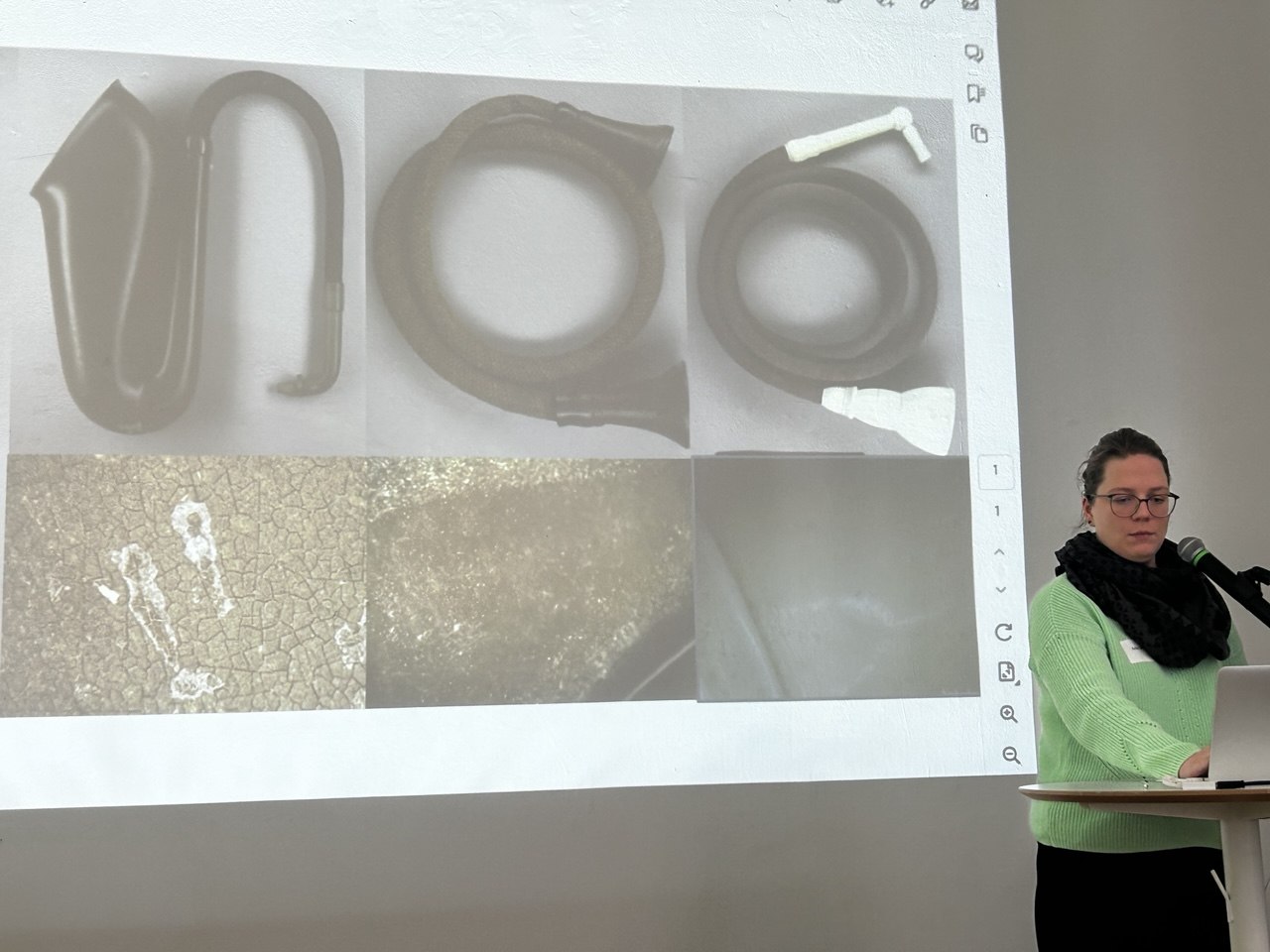
Photo: Eva Kapeller-Hallama
-
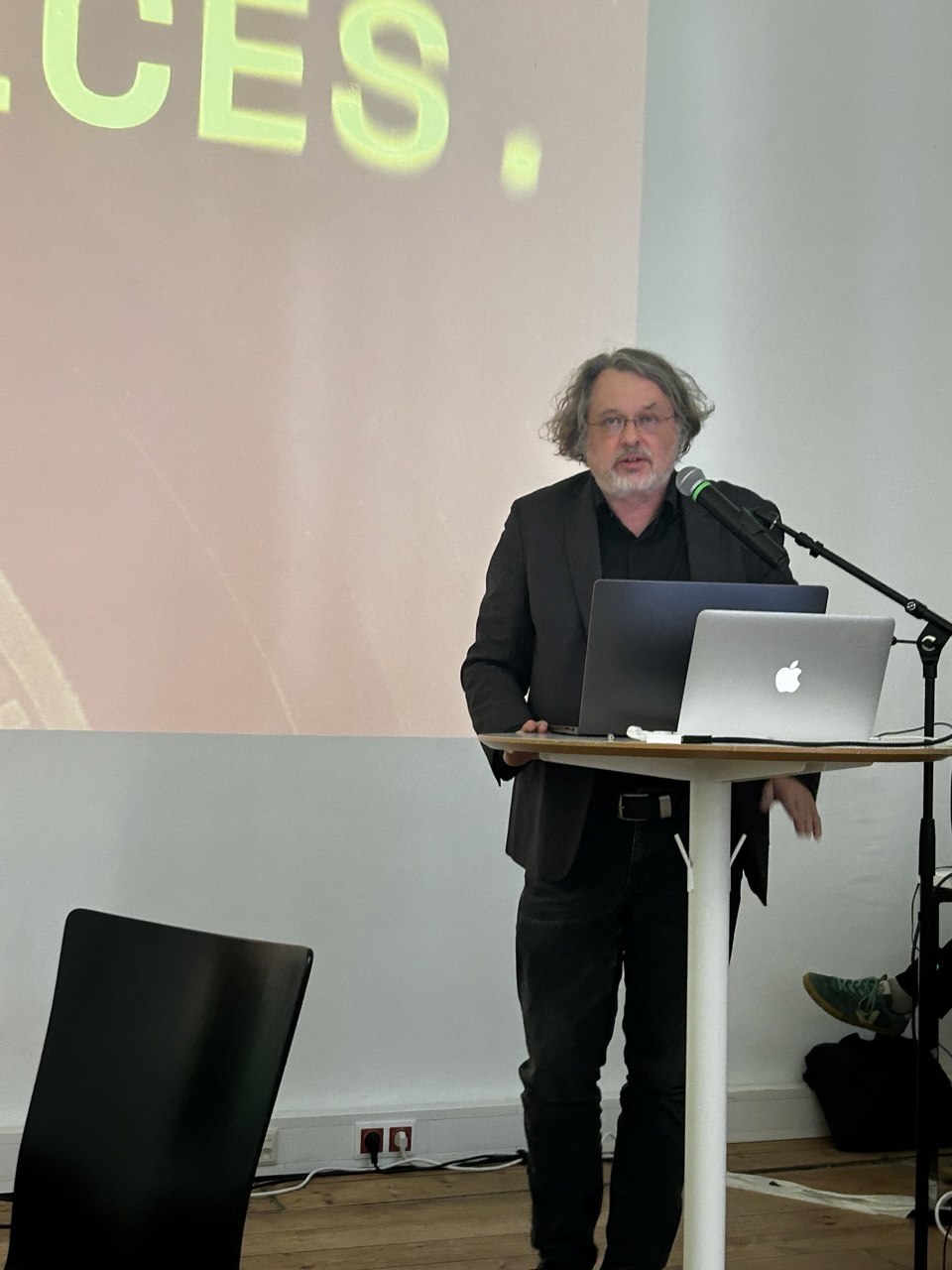
Photo: Eva Kapeller-Hallama
-
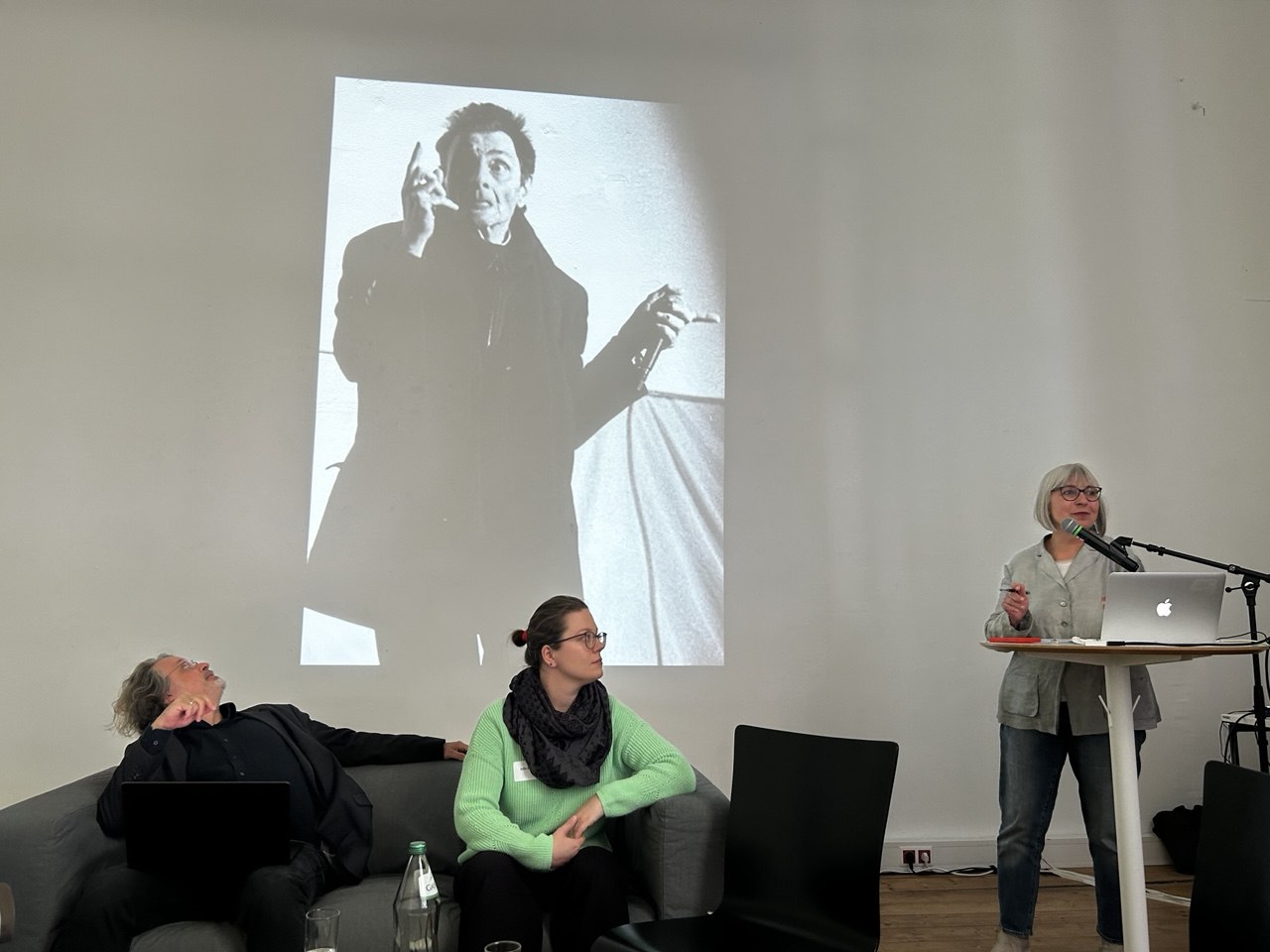
Photo: Eva Kapeller-Hallama
-
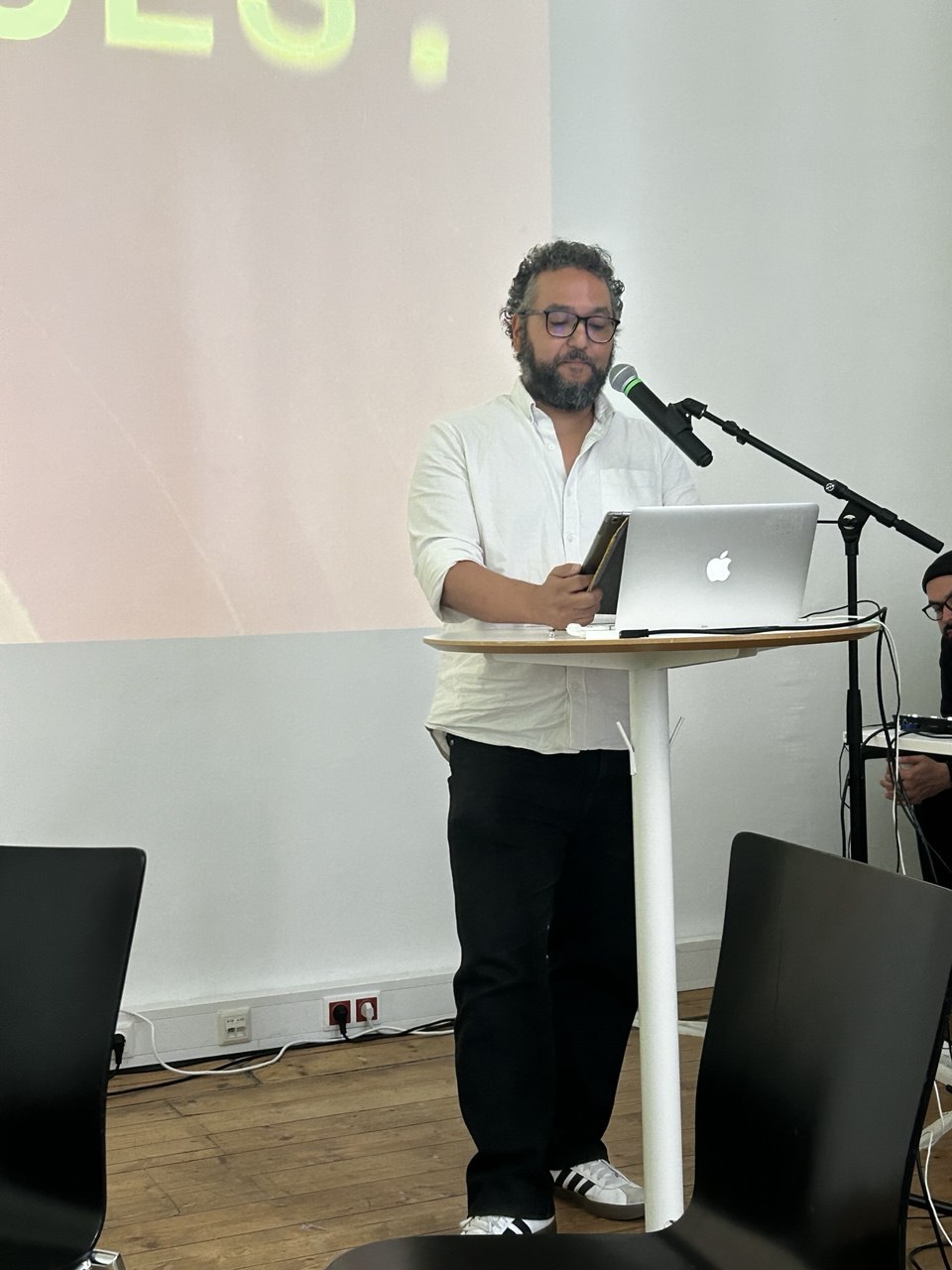
Photo: Eva Kapeller-Hallama
-
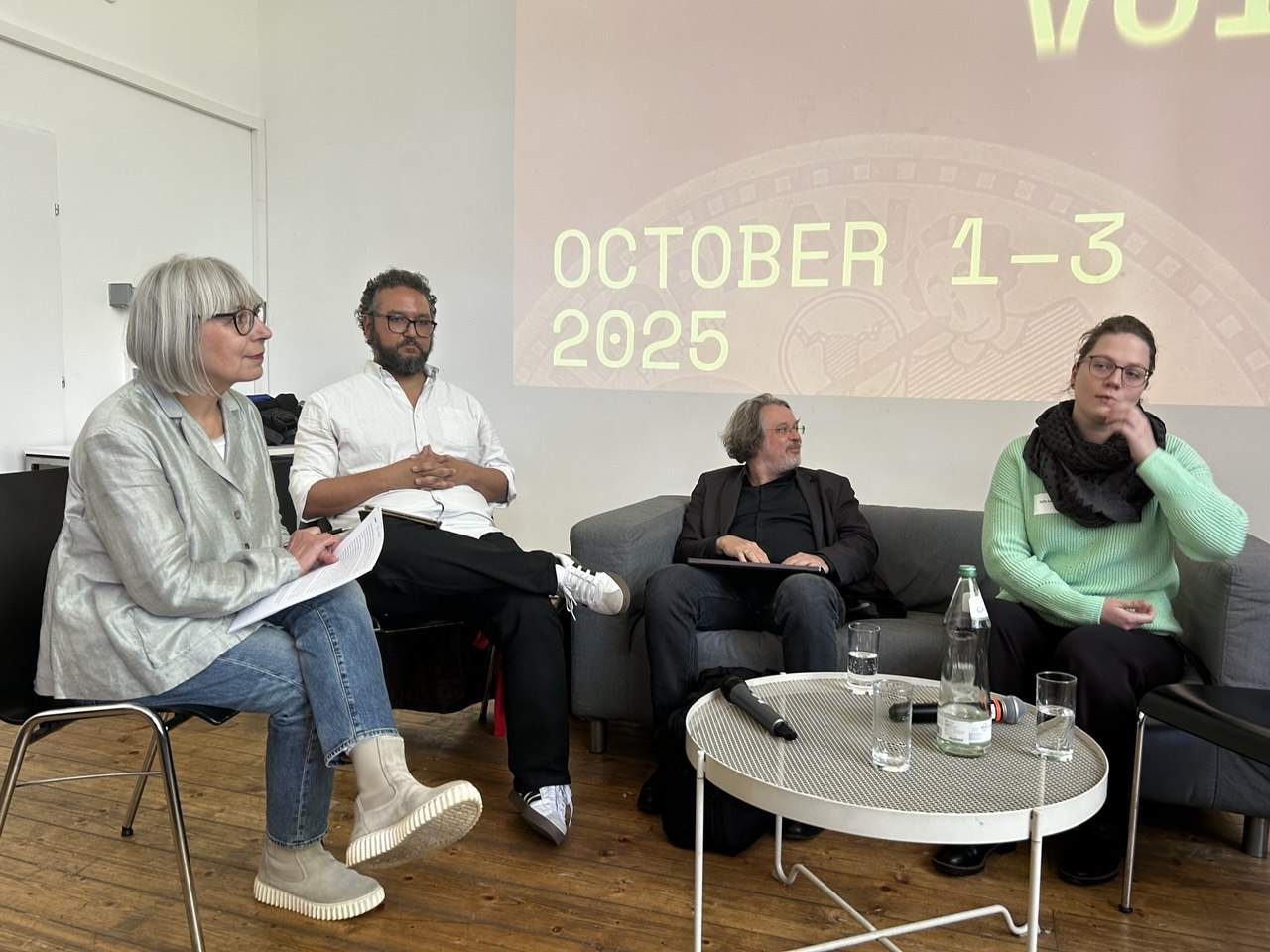
Photo: Eva Kapeller-Hallama
Gabriele Jutz, Rodrigo Chocano, Julia Sawitzki & Jens Schröter
ROUND TABLE DISCUSSION: FLEETING VOICES. RESONANCES AND REFLECTIONS
CHAIR
Laura Bohnenblust
In this closing round table, participants offer concise insights into their own research or practice, responding to questions that have shaped the conference and resonate with their individual fields. Curatorial, artistic, and conservation-based perspectives enter into dialogue with media-theoretical and postcolonial approaches to critically engage with fleeting voices and the ways in which we listen to them today.
To what extent might listening to historical sound recordings offer a way of accessing the past or even of writing the history of the future? How do recorded and replayed voices intersect with questions of ownership and cultural representation? How do voices in art engage with themes such as memory, identity, or cultural heritage?
Rather than offering closure, this session invites multiple perspectives to resonate and overlap, creating space for new connections and critical openings beyond the frame of the conference.
Gabriele Jutz (University of Applied Arts Vienna) is the author of Cinéma brut. An Alternative Genealogy of Avant-Garde Film (Springer 2010, in German), Animating Truth(s). The Films of Maria Lassnig and Their Context (2019) and co-editor (along with Edgar Lissel and Nina Jukić) of RESET THE APPARATUS! A Survey of the Photographic and the Filmic in Contemporary Art (de Gruyter 2019). She has published articles in academic journals and edited volumes, including Journal of Sonic Studies, eds. Andy Birtwistle and Laura Redhead (2025), Palgrave Handbook of Experimental Cinema, eds. Kim Knowles and Jonathan Walley (2024), Handbuch Filmanalyse, eds. Malte Hagener and Volker Pantenburg (2020), The Oxford Handbook of Sound and Image in Western Art, ed. Yael Kaduri (2016), and Kurt Kren: Structural Films, eds. Nicky Hamlyn and Simon Payne (2016).
Jens Schröter, Prof. Dr., has held the Chair of Media Studies at the University of Bonn since 2015. From 2008 to 2015, he was Professor of ‘Theory and Practice of Multimedia Systems’ (W2) at the University of Siegen. From 2010 to 2014, he was head (together with Prof. Dr. Lorenz Engell, Weimar) of ‘The Television Series as Projection and Reflection of Change’ as part of the DFG-SPP 1505: ‘Mediatized Worlds’. Head (together with Prof. Dr. Anna Echterhölter; PD Dr. Andreas Sudmann and Prof. Dr. Alexander Waibel) of the VW Main Grant ‘How is Artificial Intelligence Changing Science?’ (start: 1 August 2022, 4 years); Head (together with Dr. Felix Hüttemann) of the VW ‘Aufbruch’ project ‘The Computerized Palate’ (start 1 April 2025). Current publications: (together with Christoph Ernst): UFOs. Mediale Sichtungen, Stuttgart: Metzler 2025. (together with Christoph Ernst, Katerina Krtilova, and Andreas Sudmann, eds.), Handbook of Media Theories of the 21st Century, Springer, ongoing online and in print: 2026
Rodrigo Chocano is a Marie Skłodowska-Curie fellow at the Musicology Institute of the University of Vienna. He earned a PhD in Ethnomusicology from Indiana University. His research studies the intersection between music, racialisation, and heritage, with a focus on Afro-Latin-American communities. He authored two books and several articles in English and Spanish exploring the connections between music, cultural heritage, and race and ethnicity in Latin America. He held postdoctoral appointments at the Smithsonian Institution and the Library of Congress in Washington D.C. Prior to his doctoral training, he worked as a cultural heritage office at the UNESCO field office in Lima and the Peruvian Ministry of Culture. His experience in cultural heritage policy, as well as his decade-long engagement with Afro-Diasporic musicians and activists, inform his current research.
Julia Sawitzki received her Master’s degree in restoration, conservation science and art technology at the Technical University Munich in 2018. From April to December 2018 she was a scholar of the Conservation Science Department at the Deutsches Museum in Munich. Julia has been working as assistant conservator at the Kunsthaus Zürich from 2019 to 2021. Until the end of 2022, she was supporting the depot-moving project of the Museums of Regensburg, after which she was working as conservator at the Vienna Museum of Science and Technology until January 2025. Currently, Julia is concentrating on her work as a senior lecturer for the Academy of Fine Arts Vienna and her freelance projects. Her work focuses on the conservation of modern and contemporary artworks and cultural objects as well as the conservation and research of plastics and their degradation phenomena.
Laura Bohnenblust (she/her) is an art historian and university assistant at the Chair for Cultural Heritage Studies at the University of Vienna. Her work focuses on modern and contemporary art and exhibition history. Her research interests include intangible cultural heritage, songs in visual arts, and processes of (art) historiography. Laura studied art history in Bern and Buenos Aires, as well as German literature in Bern. She conducted research in Argentina as part of her dissertation project and completed her doctorate at the University of Bern on the global exhibition history of the 20th century.