
-
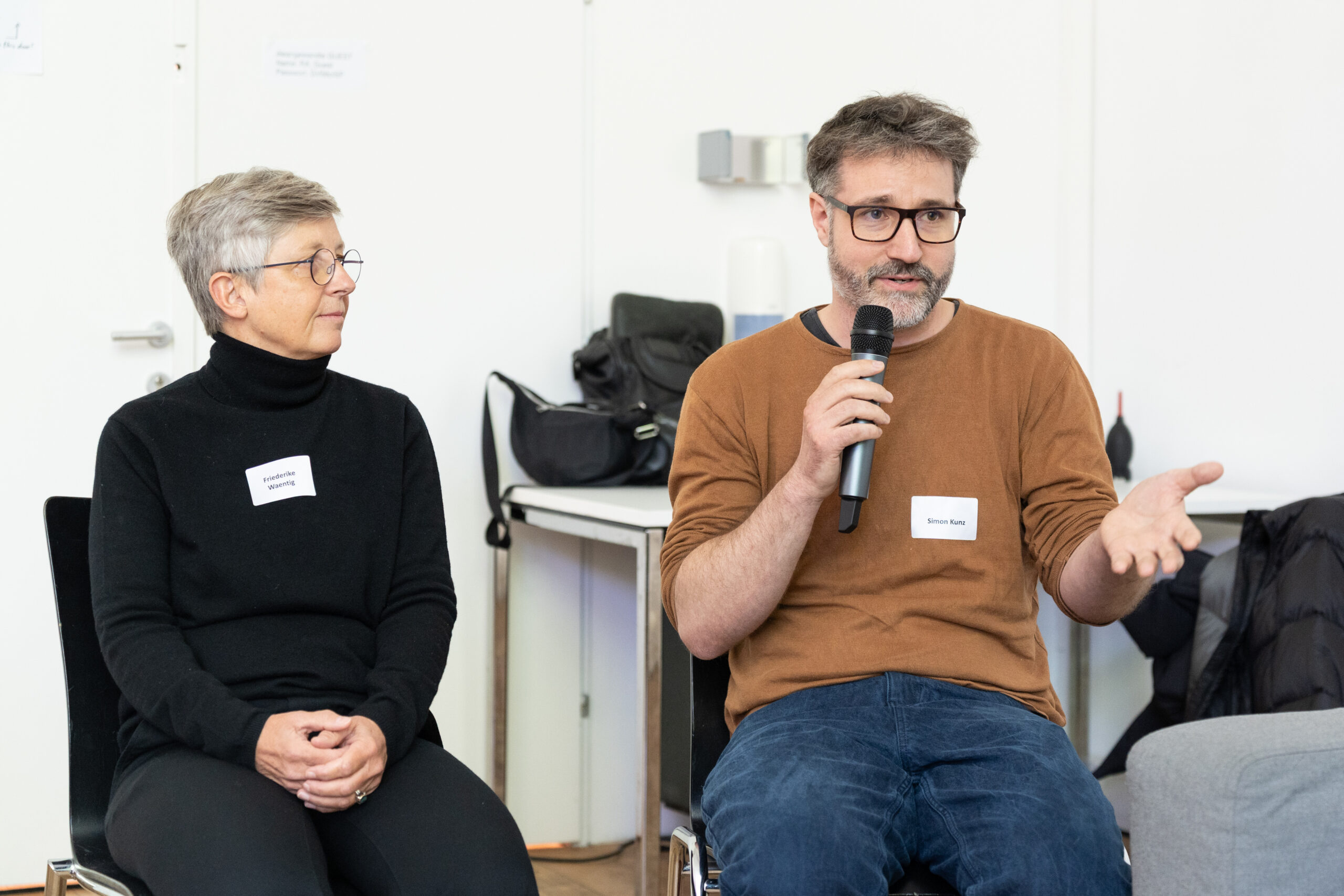
Photo: eSeL.at, Marija Sabanovic
-
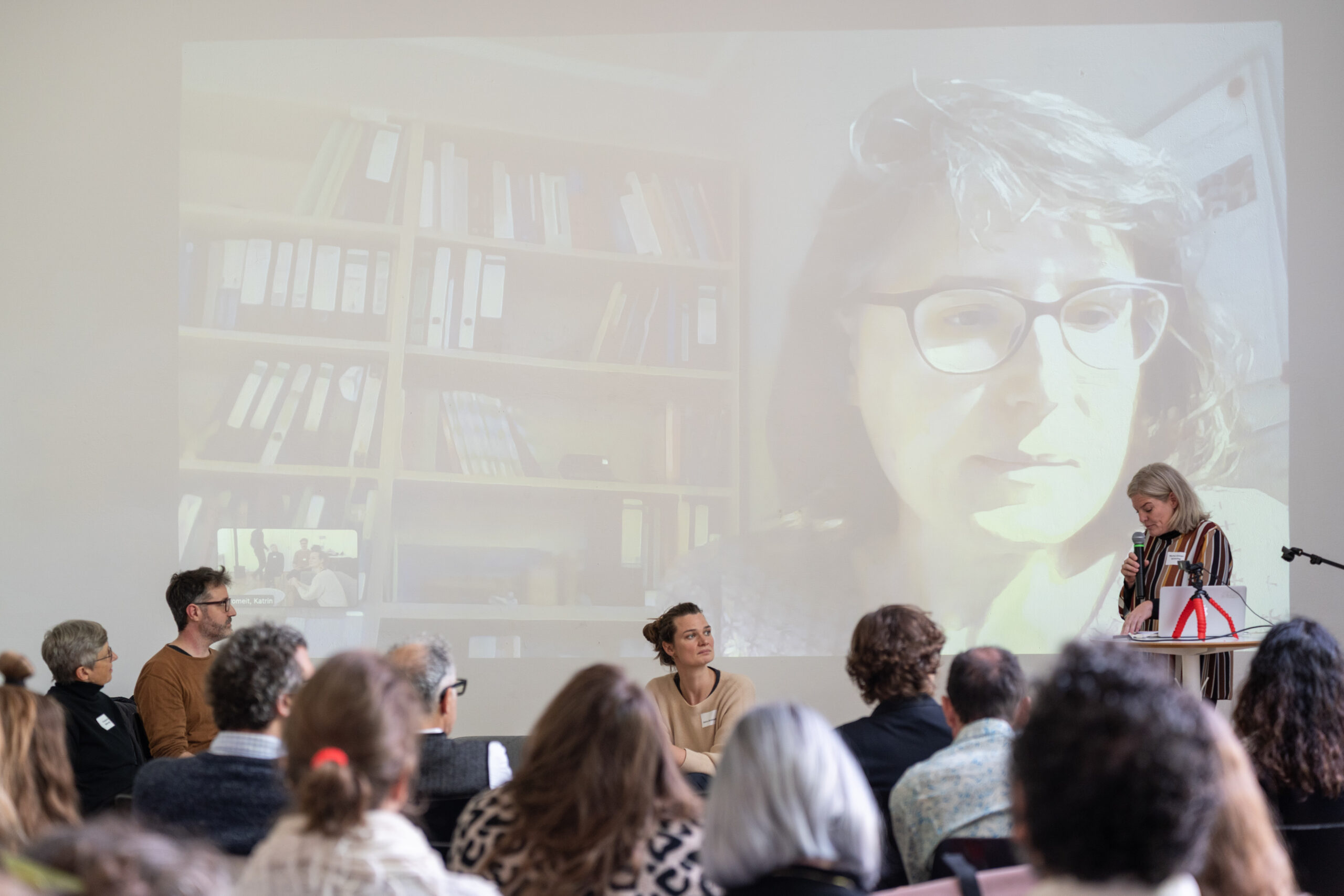
Photo: eSeL.at, Marija Sabanovic
-
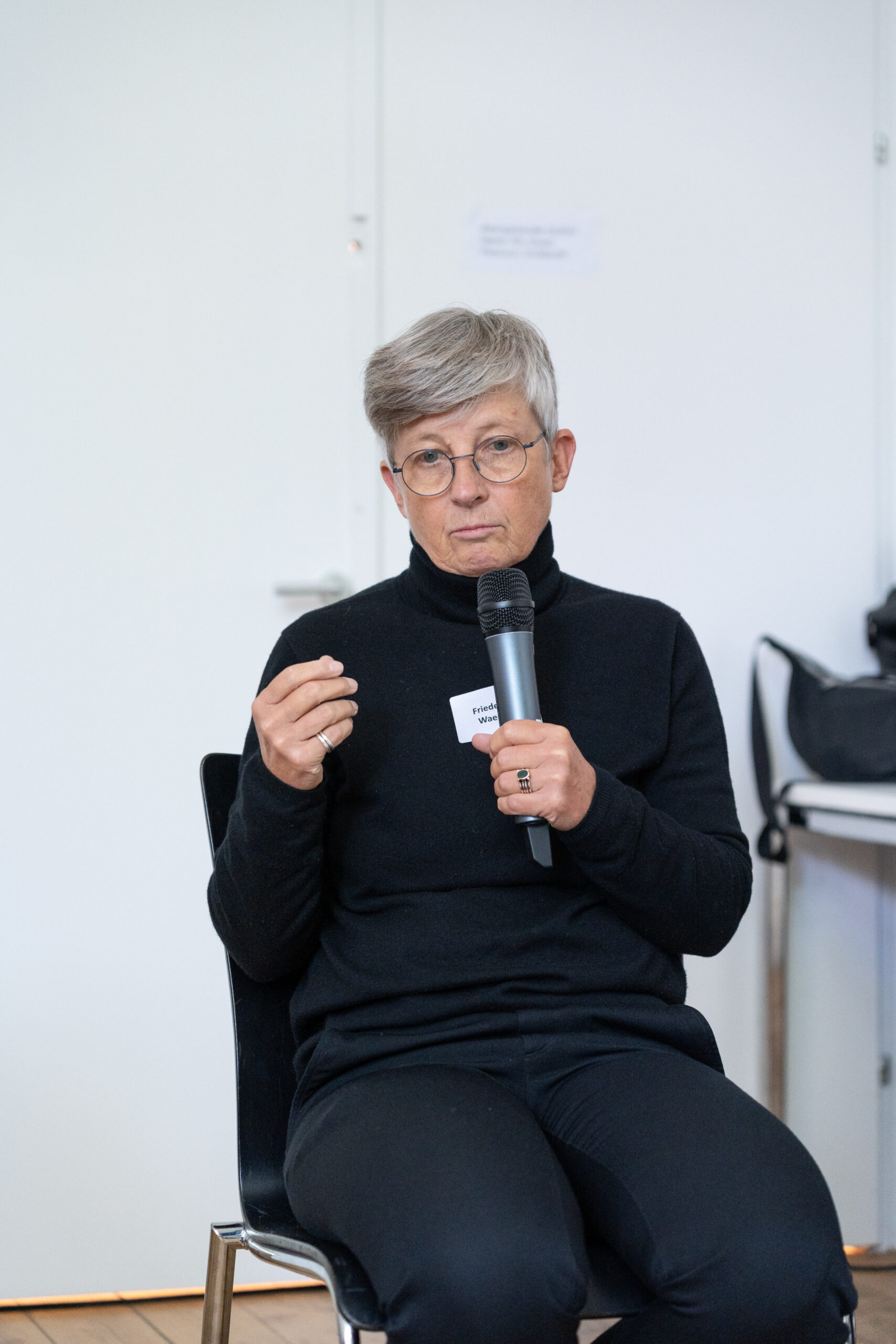
Photo: eSeL.at, Marija Sabanovic
-
Photo: eSeL.at, Marija Sabanovic
Friederike Waentig, Elena Gómez Sánchez, Simon Kunz & Katrin Abromeit
CONSERVATION TALK: CELLULOSE NITRATE LACQUERS IN DIRECT-CUT DISCS
CHAIR
Martina Griesser-Stermscheg
Metallophon, Decelith L, Pyral, Presto and Voice-o-graph are direct-cut discs used for audio letters in the 1930s and 40s featuring information layers made from cellulose nitrate coatings. The SONIME project has identified these discs within the collections of its host institutions and donors. Due to its favourable cutting properties, cellulose nitrate was the preferred material for record master production in Europe until the mid-1970s. Although it is still being used for this purpose, its application has become less frequent and subject to stricter safety regulations. As a highly flammable material, particularly in advanced stages of decomposition, cellulose nitrate poses considerable preservation challenges in collections. Strict statutory regulations govern its storage and transport. The discussion explores the chemical nature of these cultural assets and invites reflection on whether these materials warrant a similar level of caution as film materials. It considers conservation strategies and
examines the implications for galleries, libraries, Archives and museums (GLAM) professionals responsible for the care and management of Cellulose nitrate direct-cut discs, aiming to inform collection handling and policy decisions.
Friederike Waentig: Since 2003 Professor for the Conservation of Wooden Artefacts and Modern Materials at the University of Applied Sciences Cologne. Beside working as a freelance conservator she was previously: Senior Conservator at the Art and Exhibition Hall, Bonn; Conservator at the Conservation Centre Düsseldorf; Conservator at the Museum for Applied Art Cologne. She obtained her degree at the Otto-Friedrich-University of Bamberg majoring in Heritage Preservation, with minor studies in folklore and building history.
Her PhD thesis was entitled ‘Synthetic Materials in Art: Research from the conservation point of view’. Her Master’s thesis in Heritage Preservation, Otto-Friedrich-University Bamberg, was ‘Technical and Industrial Monuments – Definition, History and Preservation’ and her Master’s degree from the University of Applied Sciences Cologne, was on Conservation specialising in Wooden Artefacts. She spent a practical semester in East-Berlin (former GDR) at the Museum for Applied Art Berlin. Her focus in research is on the preservation of modern materials in art, design and architecture, specialising in the history and conservation of plastics. She has been teaching and lecturing at several institutes and published on the conservation and history of plastics. Besides giving talks she is also Consulting projects.
Elena Gómez Sánchez is a Professor at the University of Applied Sciences Georg Agricola and deputy director of the Material and Heritage Science department at the Deutsches Bergbau-Museum Bochum, a Leibniz Research Museum. She holds a PhD in Organic Chemistry and an MSc in Polymer Chemistry. Her research focuses on the long-term Degradation of polymeric materials in museum collections and their conservation challenges, as well as the development of practical, easy to implement solutions for preserving ageing plastics and rubbers.
Simon Kunz studied conservation, art technology, and conservation science at the Technical University of Munich, completing in 2011 with a diploma-thesis on cellulose Acetate audio tapes. He worked at the Rathgen Research Laboratory in Berlin on plastic degradation and non-invasive analysis (KUR-ILKAR, DBU). In 2015, he held a six month ‘Scholar in Residence’ fellowship at the Deutsches Museum, investigating plastics with ATR FTIR. He then pursued a master’s at the Georg Simon Ohm University of Applied Sciences on degradation in historic cellulose nitrate coatings. Since 2018, he has been with the Conservation Science Department at the German Mining Museum, Bochum, first as a student assistant, then Research associate, and now on the EFRE project ‘Just Scan It 3D.’ Since 2023, he has taught in the master’s programme ‘Material Engineering and Industrial Heritage Conservation’ at the Georg Agricola University of Applied Sciences. His research focuses on historic plastics and their aging behaviour, using advanced 2D correlation FTIR and (py)GCMS.
Katrin Abromeit is a conservator for audio media. She graduated from the University of Applied Sciences in Berlin (HTW. Her bachelor’s thesis focused on mould-covered Cellulose acetate audio tapes; her master’s thesis examined the stickiness of audio tapes with a polyester-polyurethane coating. Since 2020, Katrin has been working on the conservation and digitisation of audio media at the Phonogrammarchiv Wien. She gained experience at the Rathgen Research Laboratory in Berlin, the ZKM Center for Art and Media in Karlsruhe, the Filmmuseum Potsdam, and as a freelance conservator-restorer. The project ‘Sonic Memories. Audio Letters in Times of Migration and Mobility’ (SONIME) that she is implementing in collaboration with the historian Eva Kapeller-Hallama, focuses on collecting, documenting, and preserving audio letters from 1890 to 1980. It will run through April 2026.
Martina Griesser-Stermscheg is a museologist, curator, and restorer. Since 2024, she has been head of the Institute for Conservation and Restoration at the University of Applied Arts Vienna and professor of conservation and restoration as well as cultural heritage conservation management. From2021 to 2024, she established and headed the research institute at the Vienna Museum of Science and Technology (TMW). From 2013 to 2021, she was head of collections at the TMW. She is a member of the core team of schnittpunkt. Exhibition theory & practice and the management team of /ecm – educating/curating/managing. Master’s programme in Exhibition theory and practice at the University of Applied Arts Vienna. Author of Tabu Depot. Das Museumsdepot in Geschichte und Gegenwart, Vienna 2013, and Sich mit Sammlungen anlegen. Gemeinsame Dinge und alternative Archive, Berlin/Boston2020 (edited with Nora Sternfeld and Luisa Ziaja).