
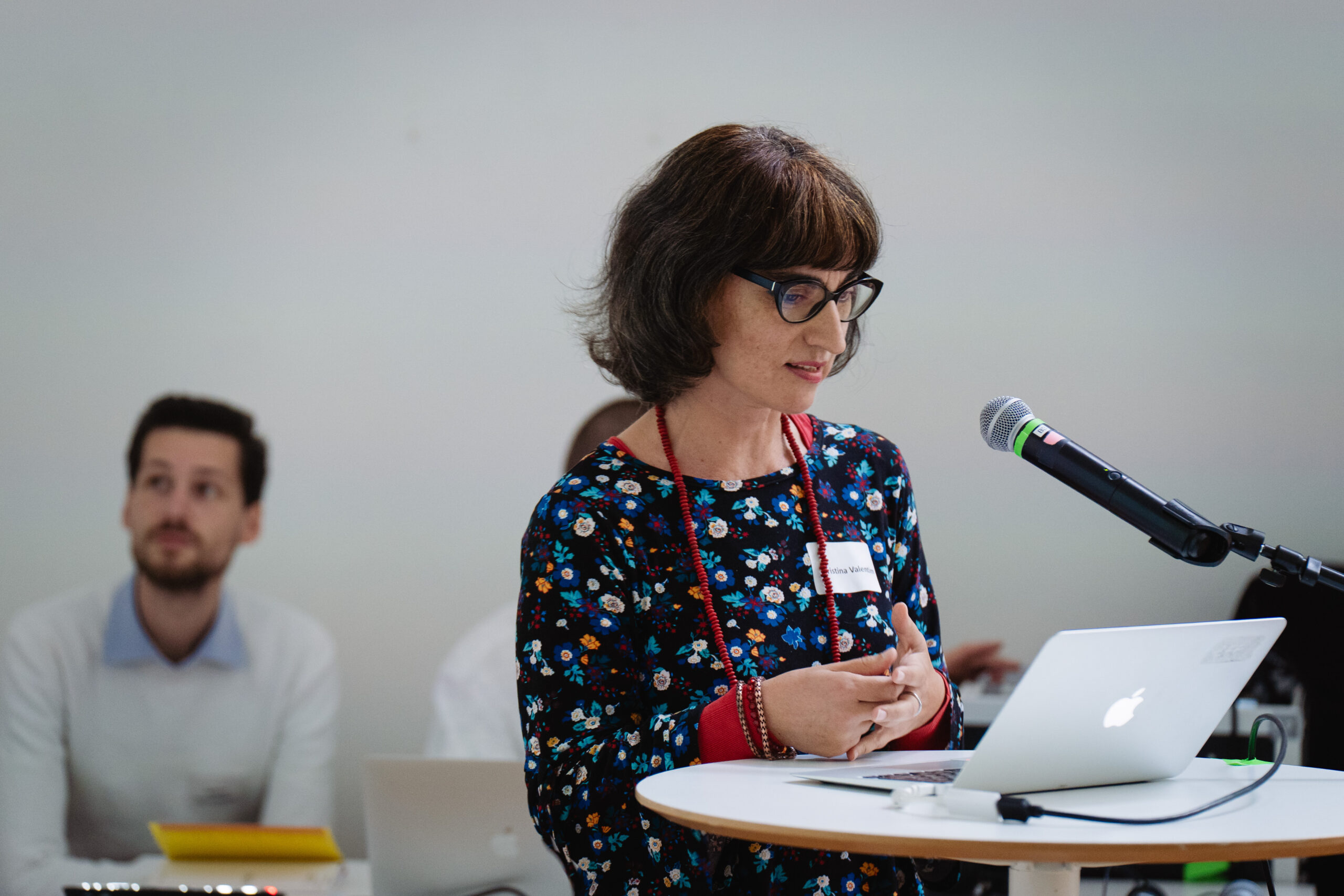
Cristina Sá Valentim
ENGAGING WITH SOUND THROUGH ALTERNATIVE MODES OF LISTENING: A DECOLONIAL APPROACH TO AN ANGOLAN FOLK SONG RECORDED IN THE 50S DURING PORTUGUESE COLONIAL RULE
Sound recordings are still not fully recognised as historical documents on a par with texts, photographs or film. Drawing on an interdisciplinary approach from anthropology, ethnomusicology, history, sound studies and postcolonial theory, this presentation discusses the decolonial potential of using sound recordings and acoustic memories as an alternative research methodology for understanding violent pasts.
Drawing on my ongoing research project ‘Archives of Lived Songs’, I will present a Cokwe song recorded in the 1950s in north-eastern Angola. This song exemplifies the uniqueness of sound recordings. They offer ways of revealing Voices and their meanings that are not fully accessible through historical written and visual Sources alone. The research combines archival sources with multi-sited, collaborative ethnographic fieldwork with communities of origin and diaspora in both
Angola and Portugal. This presentation explores the importance of using other senses, such as hearing, rather than just the visual, to discuss and reveal untold meanings of colonial power dynamics – Colonial domination and African resistance and agency – that remain hidden within these colonial archives. In doing so, this approach contributes to the decolonisation of sound archives produced during the late Portuguese colonial period in Angola. Furthermore, the digitisation of these sound Archives is crucial, not only to ensure their preservation, but also to enable the source communities to reinterpret and reclaim their acoustic heritage.
Cristina Sá Valentim is a socio-cultural anthropologist.
She is a researcher at the Institute of Social Sciences at the University of Lisbon and a visiting professor at the University of Coimbra, Portugal. Her research combines social ecology, anthropology, postcolonial theory, ethnomusicology and sound studies. She is currently coordinating the research project ‘Archives of Lived Songs: History, Memories, and Legacies of Angolan Colonial Folk Music (1950–2020)’, which explores the relationship between sound archives, colonial power, and
African agency and resistance in rural Angolan territories. In 2022 she published Sons do Império, Vozes do Cipale: Canções Cokwe e Memórias do Trabalho Forçado nas Lundas, Angola. This publication is based on her prize-winning PhD thesis, which was awarded the Agostinho Neto International Historical Research Prize, organised by the Dr. António Agostinho Neto Foundation (FAAN) in Angola, the Afro-Brazilian Institute of Higher Education (IABES) in Brazil and UNESCO.